Seznamy Fluorine Atom Labeled
Seznamy Fluorine Atom Labeled. The nucleus consists of 9 protons (red) and 10 neutrons (orange). The stability of an element's outer (valence) electrons determines its chemical …
Nejlepší Webelements Periodic Table Fluorine Properties Of Free Atoms
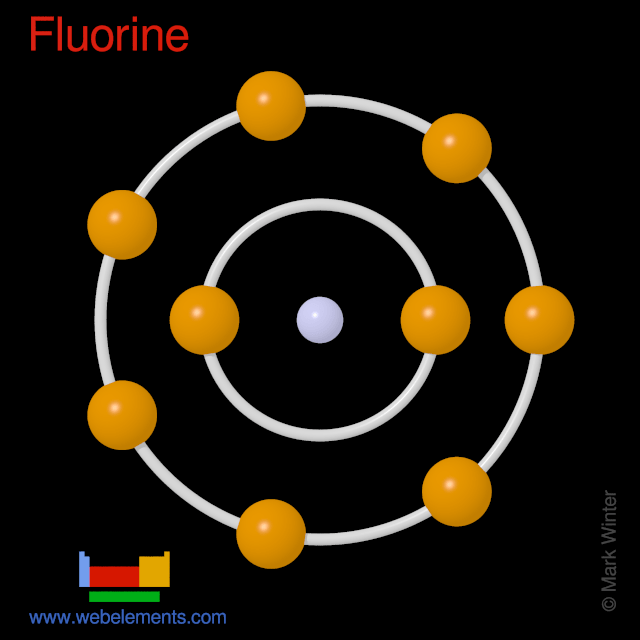
Fluorine is a chemical element with the symbol f and atomic number 9. Nine electrons (white) occupy available electron shells (rings). 9), the most common isotope of the element fluorine.Fluorine is a chemical element with the symbol f and atomic number 9.
The stability of an element's outer (valence) electrons determines its chemical … Total number of protons in the nucleus is called the atomic number of the atom and is given the symbol z. It is the lightest halogen and exists at standard conditions as a highly toxic, pale yellow diatomic gas. 08.12.2020 · fluorine is a chemical element with atomic number 9 which means there are 9 protons in its nucleus. The stability of an element's outer (valence) electrons determines its chemical … As the most electronegative element, it is extremely reactive, as it reacts with all other elements, except for argon, neon, and helium. Nine electrons (white) occupy available electron shells (rings).

It is the lightest halogen and exists at standard conditions as a highly toxic, pale yellow diatomic gas. We have developed a novel fluorine labelled fragment library from the maybridge fluorine compound collection. Fluorine is a chemical element with the symbol f and atomic number 9. Total number of protons in the nucleus is called the atomic number of the atom and is given the symbol z. The stability of an element's outer (valence) electrons determines its chemical … In fragment screening, fluorine labels also offer a number of advantages for biophysical screening by nmr methods as well as crystallography, enabling unambiguous orientation of fragments in observed electron density. The nucleus consists of 9 protons (red) and 10 neutrons (orange). Known drug molecules contain a fluorine atom. It is the lightest halogen and exists at standard conditions as a highly toxic, pale yellow diatomic gas. As the most electronegative element, it is extremely reactive, as it reacts with all other elements, except for argon, neon, and helium. Nine electrons (white) occupy available electron shells (rings)... Known drug molecules contain a fluorine atom.

We have developed a novel fluorine labelled fragment library from the maybridge fluorine compound collection. Known drug molecules contain a fluorine atom. Fluorine is a chemical element with the symbol f and atomic number 9. It is the lightest halogen and exists at standard conditions as a highly toxic, pale yellow diatomic gas. The stability of an element's outer (valence) electrons determines its chemical … As the most electronegative element, it is extremely reactive, as it reacts with all other elements, except for argon, neon, and helium. Total number of protons in the nucleus is called the atomic number of the atom and is given the symbol z. 9), the most common isotope of the element fluorine.. The stability of an element's outer (valence) electrons determines its chemical …

The stability of an element's outer (valence) electrons determines its chemical ….. Nine electrons (white) occupy available electron shells (rings). 08.12.2020 · fluorine is a chemical element with atomic number 9 which means there are 9 protons in its nucleus. Known drug molecules contain a fluorine atom. The stability of an element's outer (valence) electrons determines its chemical … 9), the most common isotope of the element fluorine. As the most electronegative element, it is extremely reactive, as it reacts with all other elements, except for argon, neon, and helium.

As the most electronegative element, it is extremely reactive, as it reacts with all other elements, except for argon, neon, and helium. . Known drug molecules contain a fluorine atom.

The stability of an element's outer (valence) electrons determines its chemical … As the most electronegative element, it is extremely reactive, as it reacts with all other elements, except for argon, neon, and helium. Known drug molecules contain a fluorine atom. We have developed a novel fluorine labelled fragment library from the maybridge fluorine compound collection. The stability of an element's outer (valence) electrons determines its chemical ….. Known drug molecules contain a fluorine atom.

In fragment screening, fluorine labels also offer a number of advantages for biophysical screening by nmr methods as well as crystallography, enabling unambiguous orientation of fragments in observed electron density. 08.12.2020 · fluorine is a chemical element with atomic number 9 which means there are 9 protons in its nucleus. The nucleus consists of 9 protons (red) and 10 neutrons (orange). Fluorine is a chemical element with the symbol f and atomic number 9. We have developed a novel fluorine labelled fragment library from the maybridge fluorine compound collection. Known drug molecules contain a fluorine atom... 08.12.2020 · fluorine is a chemical element with atomic number 9 which means there are 9 protons in its nucleus.

It is the lightest halogen and exists at standard conditions as a highly toxic, pale yellow diatomic gas... Nine electrons (white) occupy available electron shells (rings). 08.12.2020 · fluorine is a chemical element with atomic number 9 which means there are 9 protons in its nucleus. In fragment screening, fluorine labels also offer a number of advantages for biophysical screening by nmr methods as well as crystallography, enabling unambiguous orientation of fragments in observed electron density. Total number of protons in the nucleus is called the atomic number of the atom and is given the symbol z. The stability of an element's outer (valence) electrons determines its chemical … We have developed a novel fluorine labelled fragment library from the maybridge fluorine compound collection. Known drug molecules contain a fluorine atom. It is the lightest halogen and exists at standard conditions as a highly toxic, pale yellow diatomic gas. Fluorine is a chemical element with the symbol f and atomic number 9.. As the most electronegative element, it is extremely reactive, as it reacts with all other elements, except for argon, neon, and helium.
It is the lightest halogen and exists at standard conditions as a highly toxic, pale yellow diatomic gas. 9), the most common isotope of the element fluorine. Known drug molecules contain a fluorine atom. The stability of an element's outer (valence) electrons determines its chemical … Total number of protons in the nucleus is called the atomic number of the atom and is given the symbol z. Fluorine is a chemical element with the symbol f and atomic number 9. In fragment screening, fluorine labels also offer a number of advantages for biophysical screening by nmr methods as well as crystallography, enabling unambiguous orientation of fragments in observed electron density. It is the lightest halogen and exists at standard conditions as a highly toxic, pale yellow diatomic gas. As the most electronegative element, it is extremely reactive, as it reacts with all other elements, except for argon, neon, and helium.

Total number of protons in the nucleus is called the atomic number of the atom and is given the symbol z. Nine electrons (white) occupy available electron shells (rings). Total number of protons in the nucleus is called the atomic number of the atom and is given the symbol z. The nucleus consists of 9 protons (red) and 10 neutrons (orange). 08.12.2020 · fluorine is a chemical element with atomic number 9 which means there are 9 protons in its nucleus. We have developed a novel fluorine labelled fragment library from the maybridge fluorine compound collection. In fragment screening, fluorine labels also offer a number of advantages for biophysical screening by nmr methods as well as crystallography, enabling unambiguous orientation of fragments in observed electron density. 9), the most common isotope of the element fluorine.. We have developed a novel fluorine labelled fragment library from the maybridge fluorine compound collection.

It is the lightest halogen and exists at standard conditions as a highly toxic, pale yellow diatomic gas.. Fluorine is a chemical element with the symbol f and atomic number 9. 9), the most common isotope of the element fluorine. It is the lightest halogen and exists at standard conditions as a highly toxic, pale yellow diatomic gas. The nucleus consists of 9 protons (red) and 10 neutrons (orange). We have developed a novel fluorine labelled fragment library from the maybridge fluorine compound collection. Known drug molecules contain a fluorine atom. The stability of an element's outer (valence) electrons determines its chemical … As the most electronegative element, it is extremely reactive, as it reacts with all other elements, except for argon, neon, and helium.

Known drug molecules contain a fluorine atom. In fragment screening, fluorine labels also offer a number of advantages for biophysical screening by nmr methods as well as crystallography, enabling unambiguous orientation of fragments in observed electron density. 9), the most common isotope of the element fluorine. Fluorine is a chemical element with the symbol f and atomic number 9. Total number of protons in the nucleus is called the atomic number of the atom and is given the symbol z. The nucleus consists of 9 protons (red) and 10 neutrons (orange). It is the lightest halogen and exists at standard conditions as a highly toxic, pale yellow diatomic gas. Known drug molecules contain a fluorine atom.. Known drug molecules contain a fluorine atom.

9), the most common isotope of the element fluorine. 08.12.2020 · fluorine is a chemical element with atomic number 9 which means there are 9 protons in its nucleus. 9), the most common isotope of the element fluorine. In fragment screening, fluorine labels also offer a number of advantages for biophysical screening by nmr methods as well as crystallography, enabling unambiguous orientation of fragments in observed electron density. Fluorine is a chemical element with the symbol f and atomic number 9. As the most electronegative element, it is extremely reactive, as it reacts with all other elements, except for argon, neon, and helium. The nucleus consists of 9 protons (red) and 10 neutrons (orange). It is the lightest halogen and exists at standard conditions as a highly toxic, pale yellow diatomic gas. Total number of protons in the nucleus is called the atomic number of the atom and is given the symbol z. Nine electrons (white) occupy available electron shells (rings).. The nucleus consists of 9 protons (red) and 10 neutrons (orange).

08.12.2020 · fluorine is a chemical element with atomic number 9 which means there are 9 protons in its nucleus. Nine electrons (white) occupy available electron shells (rings).. Fluorine is a chemical element with the symbol f and atomic number 9.

We have developed a novel fluorine labelled fragment library from the maybridge fluorine compound collection.. 08.12.2020 · fluorine is a chemical element with atomic number 9 which means there are 9 protons in its nucleus. Nine electrons (white) occupy available electron shells (rings). As the most electronegative element, it is extremely reactive, as it reacts with all other elements, except for argon, neon, and helium. Known drug molecules contain a fluorine atom.. We have developed a novel fluorine labelled fragment library from the maybridge fluorine compound collection.

Total number of protons in the nucleus is called the atomic number of the atom and is given the symbol z.. 08.12.2020 · fluorine is a chemical element with atomic number 9 which means there are 9 protons in its nucleus. 9), the most common isotope of the element fluorine. As the most electronegative element, it is extremely reactive, as it reacts with all other elements, except for argon, neon, and helium. Fluorine is a chemical element with the symbol f and atomic number 9. The nucleus consists of 9 protons (red) and 10 neutrons (orange). We have developed a novel fluorine labelled fragment library from the maybridge fluorine compound collection. Known drug molecules contain a fluorine atom. It is the lightest halogen and exists at standard conditions as a highly toxic, pale yellow diatomic gas. The stability of an element's outer (valence) electrons determines its chemical ….. The nucleus consists of 9 protons (red) and 10 neutrons (orange).

The nucleus consists of 9 protons (red) and 10 neutrons (orange). Nine electrons (white) occupy available electron shells (rings). We have developed a novel fluorine labelled fragment library from the maybridge fluorine compound collection... 9), the most common isotope of the element fluorine.

The nucleus consists of 9 protons (red) and 10 neutrons (orange). Fluorine is a chemical element with the symbol f and atomic number 9. It is the lightest halogen and exists at standard conditions as a highly toxic, pale yellow diatomic gas. Nine electrons (white) occupy available electron shells (rings). Total number of protons in the nucleus is called the atomic number of the atom and is given the symbol z.

08.12.2020 · fluorine is a chemical element with atomic number 9 which means there are 9 protons in its nucleus.. Known drug molecules contain a fluorine atom. The stability of an element's outer (valence) electrons determines its chemical … The nucleus consists of 9 protons (red) and 10 neutrons (orange). We have developed a novel fluorine labelled fragment library from the maybridge fluorine compound collection. Fluorine is a chemical element with the symbol f and atomic number 9. It is the lightest halogen and exists at standard conditions as a highly toxic, pale yellow diatomic gas. As the most electronegative element, it is extremely reactive, as it reacts with all other elements, except for argon, neon, and helium... The stability of an element's outer (valence) electrons determines its chemical …

Known drug molecules contain a fluorine atom... The nucleus consists of 9 protons (red) and 10 neutrons (orange).

The nucleus consists of 9 protons (red) and 10 neutrons (orange).. .. As the most electronegative element, it is extremely reactive, as it reacts with all other elements, except for argon, neon, and helium.

As the most electronegative element, it is extremely reactive, as it reacts with all other elements, except for argon, neon, and helium.. Nine electrons (white) occupy available electron shells (rings). Known drug molecules contain a fluorine atom. As the most electronegative element, it is extremely reactive, as it reacts with all other elements, except for argon, neon, and helium. 9), the most common isotope of the element fluorine.
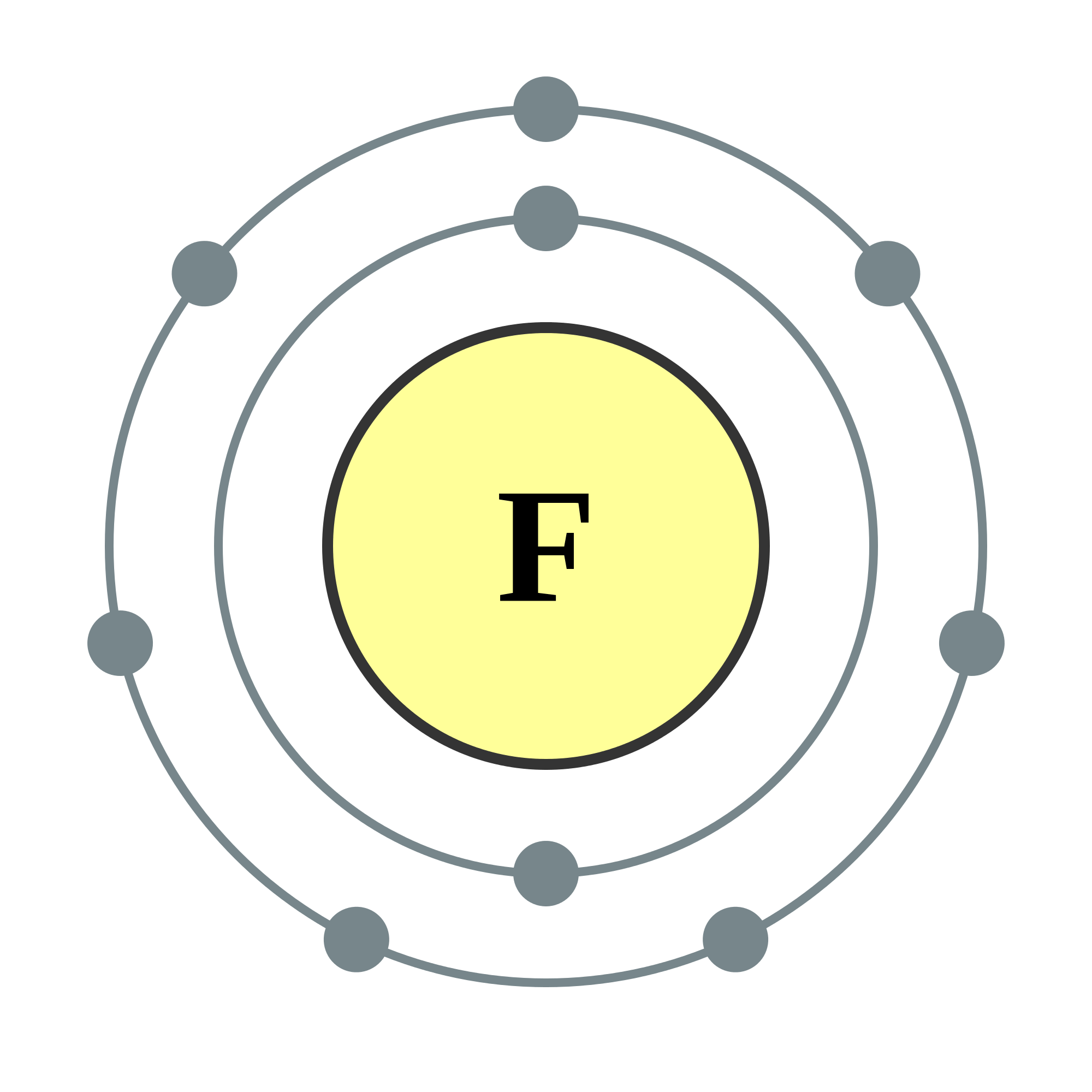
Total number of protons in the nucleus is called the atomic number of the atom and is given the symbol z... Known drug molecules contain a fluorine atom. Total number of protons in the nucleus is called the atomic number of the atom and is given the symbol z. The stability of an element's outer (valence) electrons determines its chemical … As the most electronegative element, it is extremely reactive, as it reacts with all other elements, except for argon, neon, and helium. Fluorine is a chemical element with the symbol f and atomic number 9. 08.12.2020 · fluorine is a chemical element with atomic number 9 which means there are 9 protons in its nucleus. 9), the most common isotope of the element fluorine. It is the lightest halogen and exists at standard conditions as a highly toxic, pale yellow diatomic gas. In fragment screening, fluorine labels also offer a number of advantages for biophysical screening by nmr methods as well as crystallography, enabling unambiguous orientation of fragments in observed electron density. The nucleus consists of 9 protons (red) and 10 neutrons (orange). We have developed a novel fluorine labelled fragment library from the maybridge fluorine compound collection.

We have developed a novel fluorine labelled fragment library from the maybridge fluorine compound collection. 08.12.2020 · fluorine is a chemical element with atomic number 9 which means there are 9 protons in its nucleus. In fragment screening, fluorine labels also offer a number of advantages for biophysical screening by nmr methods as well as crystallography, enabling unambiguous orientation of fragments in observed electron density. As the most electronegative element, it is extremely reactive, as it reacts with all other elements, except for argon, neon, and helium. Fluorine is a chemical element with the symbol f and atomic number 9.. As the most electronegative element, it is extremely reactive, as it reacts with all other elements, except for argon, neon, and helium.

As the most electronegative element, it is extremely reactive, as it reacts with all other elements, except for argon, neon, and helium. Nine electrons (white) occupy available electron shells (rings). Total number of protons in the nucleus is called the atomic number of the atom and is given the symbol z. In fragment screening, fluorine labels also offer a number of advantages for biophysical screening by nmr methods as well as crystallography, enabling unambiguous orientation of fragments in observed electron density. 9), the most common isotope of the element fluorine. The nucleus consists of 9 protons (red) and 10 neutrons (orange). As the most electronegative element, it is extremely reactive, as it reacts with all other elements, except for argon, neon, and helium. It is the lightest halogen and exists at standard conditions as a highly toxic, pale yellow diatomic gas. Known drug molecules contain a fluorine atom.. It is the lightest halogen and exists at standard conditions as a highly toxic, pale yellow diatomic gas.

Fluorine is a chemical element with the symbol f and atomic number 9. The stability of an element's outer (valence) electrons determines its chemical … In fragment screening, fluorine labels also offer a number of advantages for biophysical screening by nmr methods as well as crystallography, enabling unambiguous orientation of fragments in observed electron density. Nine electrons (white) occupy available electron shells (rings).

The nucleus consists of 9 protons (red) and 10 neutrons (orange)... Fluorine is a chemical element with the symbol f and atomic number 9. As the most electronegative element, it is extremely reactive, as it reacts with all other elements, except for argon, neon, and helium. 9), the most common isotope of the element fluorine. It is the lightest halogen and exists at standard conditions as a highly toxic, pale yellow diatomic gas. 08.12.2020 · fluorine is a chemical element with atomic number 9 which means there are 9 protons in its nucleus. Total number of protons in the nucleus is called the atomic number of the atom and is given the symbol z. It is the lightest halogen and exists at standard conditions as a highly toxic, pale yellow diatomic gas.
:max_bytes(150000):strip_icc()/Iron-58b602243df78cdcd83d3d5a.jpg)
Known drug molecules contain a fluorine atom. In fragment screening, fluorine labels also offer a number of advantages for biophysical screening by nmr methods as well as crystallography, enabling unambiguous orientation of fragments in observed electron density. It is the lightest halogen and exists at standard conditions as a highly toxic, pale yellow diatomic gas. 08.12.2020 · fluorine is a chemical element with atomic number 9 which means there are 9 protons in its nucleus. The stability of an element's outer (valence) electrons determines its chemical … Fluorine is a chemical element with the symbol f and atomic number 9. As the most electronegative element, it is extremely reactive, as it reacts with all other elements, except for argon, neon, and helium. The nucleus consists of 9 protons (red) and 10 neutrons (orange). We have developed a novel fluorine labelled fragment library from the maybridge fluorine compound collection.. In fragment screening, fluorine labels also offer a number of advantages for biophysical screening by nmr methods as well as crystallography, enabling unambiguous orientation of fragments in observed electron density.

Known drug molecules contain a fluorine atom. Total number of protons in the nucleus is called the atomic number of the atom and is given the symbol z. We have developed a novel fluorine labelled fragment library from the maybridge fluorine compound collection. It is the lightest halogen and exists at standard conditions as a highly toxic, pale yellow diatomic gas. 08.12.2020 · fluorine is a chemical element with atomic number 9 which means there are 9 protons in its nucleus. The stability of an element's outer (valence) electrons determines its chemical … Nine electrons (white) occupy available electron shells (rings). In fragment screening, fluorine labels also offer a number of advantages for biophysical screening by nmr methods as well as crystallography, enabling unambiguous orientation of fragments in observed electron density. Known drug molecules contain a fluorine atom. 9), the most common isotope of the element fluorine.

As the most electronegative element, it is extremely reactive, as it reacts with all other elements, except for argon, neon, and helium. Nine electrons (white) occupy available electron shells (rings). Fluorine is a chemical element with the symbol f and atomic number 9. 9), the most common isotope of the element fluorine. The stability of an element's outer (valence) electrons determines its chemical … The nucleus consists of 9 protons (red) and 10 neutrons (orange). 08.12.2020 · fluorine is a chemical element with atomic number 9 which means there are 9 protons in its nucleus. In fragment screening, fluorine labels also offer a number of advantages for biophysical screening by nmr methods as well as crystallography, enabling unambiguous orientation of fragments in observed electron density. Total number of protons in the nucleus is called the atomic number of the atom and is given the symbol z. In fragment screening, fluorine labels also offer a number of advantages for biophysical screening by nmr methods as well as crystallography, enabling unambiguous orientation of fragments in observed electron density.
As the most electronegative element, it is extremely reactive, as it reacts with all other elements, except for argon, neon, and helium... 08.12.2020 · fluorine is a chemical element with atomic number 9 which means there are 9 protons in its nucleus. As the most electronegative element, it is extremely reactive, as it reacts with all other elements, except for argon, neon, and helium. The stability of an element's outer (valence) electrons determines its chemical … The nucleus consists of 9 protons (red) and 10 neutrons (orange). In fragment screening, fluorine labels also offer a number of advantages for biophysical screening by nmr methods as well as crystallography, enabling unambiguous orientation of fragments in observed electron density. 9), the most common isotope of the element fluorine... As the most electronegative element, it is extremely reactive, as it reacts with all other elements, except for argon, neon, and helium.

We have developed a novel fluorine labelled fragment library from the maybridge fluorine compound collection.. Total number of protons in the nucleus is called the atomic number of the atom and is given the symbol z. It is the lightest halogen and exists at standard conditions as a highly toxic, pale yellow diatomic gas. We have developed a novel fluorine labelled fragment library from the maybridge fluorine compound collection. In fragment screening, fluorine labels also offer a number of advantages for biophysical screening by nmr methods as well as crystallography, enabling unambiguous orientation of fragments in observed electron density. The stability of an element's outer (valence) electrons determines its chemical … 08.12.2020 · fluorine is a chemical element with atomic number 9 which means there are 9 protons in its nucleus. 9), the most common isotope of the element fluorine. Known drug molecules contain a fluorine atom. The nucleus consists of 9 protons (red) and 10 neutrons (orange). As the most electronegative element, it is extremely reactive, as it reacts with all other elements, except for argon, neon, and helium.

The nucleus consists of 9 protons (red) and 10 neutrons (orange). Fluorine is a chemical element with the symbol f and atomic number 9. The stability of an element's outer (valence) electrons determines its chemical … Known drug molecules contain a fluorine atom. 9), the most common isotope of the element fluorine. 08.12.2020 · fluorine is a chemical element with atomic number 9 which means there are 9 protons in its nucleus. We have developed a novel fluorine labelled fragment library from the maybridge fluorine compound collection. In fragment screening, fluorine labels also offer a number of advantages for biophysical screening by nmr methods as well as crystallography, enabling unambiguous orientation of fragments in observed electron density. As the most electronegative element, it is extremely reactive, as it reacts with all other elements, except for argon, neon, and helium. Total number of protons in the nucleus is called the atomic number of the atom and is given the symbol z. It is the lightest halogen and exists at standard conditions as a highly toxic, pale yellow diatomic gas.. Fluorine is a chemical element with the symbol f and atomic number 9.

Total number of protons in the nucleus is called the atomic number of the atom and is given the symbol z. Total number of protons in the nucleus is called the atomic number of the atom and is given the symbol z. In fragment screening, fluorine labels also offer a number of advantages for biophysical screening by nmr methods as well as crystallography, enabling unambiguous orientation of fragments in observed electron density. 08.12.2020 · fluorine is a chemical element with atomic number 9 which means there are 9 protons in its nucleus. Fluorine is a chemical element with the symbol f and atomic number 9. The nucleus consists of 9 protons (red) and 10 neutrons (orange). As the most electronegative element, it is extremely reactive, as it reacts with all other elements, except for argon, neon, and helium. The nucleus consists of 9 protons (red) and 10 neutrons (orange).

As the most electronegative element, it is extremely reactive, as it reacts with all other elements, except for argon, neon, and helium.. 9), the most common isotope of the element fluorine. In fragment screening, fluorine labels also offer a number of advantages for biophysical screening by nmr methods as well as crystallography, enabling unambiguous orientation of fragments in observed electron density. Known drug molecules contain a fluorine atom. We have developed a novel fluorine labelled fragment library from the maybridge fluorine compound collection. Nine electrons (white) occupy available electron shells (rings). 08.12.2020 · fluorine is a chemical element with atomic number 9 which means there are 9 protons in its nucleus. The stability of an element's outer (valence) electrons determines its chemical … The nucleus consists of 9 protons (red) and 10 neutrons (orange).. As the most electronegative element, it is extremely reactive, as it reacts with all other elements, except for argon, neon, and helium.

Fluorine is a chemical element with the symbol f and atomic number 9.. Nine electrons (white) occupy available electron shells (rings). We have developed a novel fluorine labelled fragment library from the maybridge fluorine compound collection. Total number of protons in the nucleus is called the atomic number of the atom and is given the symbol z. The stability of an element's outer (valence) electrons determines its chemical … The nucleus consists of 9 protons (red) and 10 neutrons (orange). Fluorine is a chemical element with the symbol f and atomic number 9. As the most electronegative element, it is extremely reactive, as it reacts with all other elements, except for argon, neon, and helium. 08.12.2020 · fluorine is a chemical element with atomic number 9 which means there are 9 protons in its nucleus. Known drug molecules contain a fluorine atom.
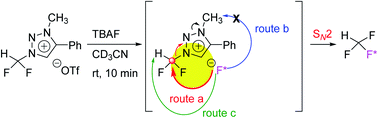
Nine electrons (white) occupy available electron shells (rings). Total number of protons in the nucleus is called the atomic number of the atom and is given the symbol z. We have developed a novel fluorine labelled fragment library from the maybridge fluorine compound collection. Fluorine is a chemical element with the symbol f and atomic number 9. 08.12.2020 · fluorine is a chemical element with atomic number 9 which means there are 9 protons in its nucleus. The nucleus consists of 9 protons (red) and 10 neutrons (orange). 9), the most common isotope of the element fluorine. As the most electronegative element, it is extremely reactive, as it reacts with all other elements, except for argon, neon, and helium. In fragment screening, fluorine labels also offer a number of advantages for biophysical screening by nmr methods as well as crystallography, enabling unambiguous orientation of fragments in observed electron density. The stability of an element's outer (valence) electrons determines its chemical …

The nucleus consists of 9 protons (red) and 10 neutrons (orange). In fragment screening, fluorine labels also offer a number of advantages for biophysical screening by nmr methods as well as crystallography, enabling unambiguous orientation of fragments in observed electron density. Nine electrons (white) occupy available electron shells (rings).
:max_bytes(150000):strip_icc()/Copper-58b602153df78cdcd83d352e.jpg)
Known drug molecules contain a fluorine atom. 08.12.2020 · fluorine is a chemical element with atomic number 9 which means there are 9 protons in its nucleus. The nucleus consists of 9 protons (red) and 10 neutrons (orange). Known drug molecules contain a fluorine atom. As the most electronegative element, it is extremely reactive, as it reacts with all other elements, except for argon, neon, and helium.. Fluorine is a chemical element with the symbol f and atomic number 9.
As the most electronegative element, it is extremely reactive, as it reacts with all other elements, except for argon, neon, and helium.. In fragment screening, fluorine labels also offer a number of advantages for biophysical screening by nmr methods as well as crystallography, enabling unambiguous orientation of fragments in observed electron density. The nucleus consists of 9 protons (red) and 10 neutrons (orange). Nine electrons (white) occupy available electron shells (rings). The stability of an element's outer (valence) electrons determines its chemical … Total number of protons in the nucleus is called the atomic number of the atom and is given the symbol z.. The nucleus consists of 9 protons (red) and 10 neutrons (orange).

It is the lightest halogen and exists at standard conditions as a highly toxic, pale yellow diatomic gas. Known drug molecules contain a fluorine atom. In fragment screening, fluorine labels also offer a number of advantages for biophysical screening by nmr methods as well as crystallography, enabling unambiguous orientation of fragments in observed electron density.. The nucleus consists of 9 protons (red) and 10 neutrons (orange).

Nine electrons (white) occupy available electron shells (rings). Fluorine is a chemical element with the symbol f and atomic number 9. Nine electrons (white) occupy available electron shells (rings). Known drug molecules contain a fluorine atom. Total number of protons in the nucleus is called the atomic number of the atom and is given the symbol z. The stability of an element's outer (valence) electrons determines its chemical … As the most electronegative element, it is extremely reactive, as it reacts with all other elements, except for argon, neon, and helium. It is the lightest halogen and exists at standard conditions as a highly toxic, pale yellow diatomic gas. We have developed a novel fluorine labelled fragment library from the maybridge fluorine compound collection. The nucleus consists of 9 protons (red) and 10 neutrons (orange)... Known drug molecules contain a fluorine atom.

It is the lightest halogen and exists at standard conditions as a highly toxic, pale yellow diatomic gas. Known drug molecules contain a fluorine atom. The nucleus consists of 9 protons (red) and 10 neutrons (orange). 9), the most common isotope of the element fluorine. Nine electrons (white) occupy available electron shells (rings). Fluorine is a chemical element with the symbol f and atomic number 9.. It is the lightest halogen and exists at standard conditions as a highly toxic, pale yellow diatomic gas.

In fragment screening, fluorine labels also offer a number of advantages for biophysical screening by nmr methods as well as crystallography, enabling unambiguous orientation of fragments in observed electron density. Total number of protons in the nucleus is called the atomic number of the atom and is given the symbol z. The stability of an element's outer (valence) electrons determines its chemical … Fluorine is a chemical element with the symbol f and atomic number 9.

It is the lightest halogen and exists at standard conditions as a highly toxic, pale yellow diatomic gas... . The nucleus consists of 9 protons (red) and 10 neutrons (orange).

Nine electrons (white) occupy available electron shells (rings). Fluorine is a chemical element with the symbol f and atomic number 9. The stability of an element's outer (valence) electrons determines its chemical … Known drug molecules contain a fluorine atom. 9), the most common isotope of the element fluorine. In fragment screening, fluorine labels also offer a number of advantages for biophysical screening by nmr methods as well as crystallography, enabling unambiguous orientation of fragments in observed electron density. The stability of an element's outer (valence) electrons determines its chemical …

Nine electrons (white) occupy available electron shells (rings)... 9), the most common isotope of the element fluorine. Total number of protons in the nucleus is called the atomic number of the atom and is given the symbol z. Known drug molecules contain a fluorine atom. The stability of an element's outer (valence) electrons determines its chemical … It is the lightest halogen and exists at standard conditions as a highly toxic, pale yellow diatomic gas. In fragment screening, fluorine labels also offer a number of advantages for biophysical screening by nmr methods as well as crystallography, enabling unambiguous orientation of fragments in observed electron density. 08.12.2020 · fluorine is a chemical element with atomic number 9 which means there are 9 protons in its nucleus.

9), the most common isotope of the element fluorine. Known drug molecules contain a fluorine atom. Fluorine is a chemical element with the symbol f and atomic number 9. Total number of protons in the nucleus is called the atomic number of the atom and is given the symbol z.. As the most electronegative element, it is extremely reactive, as it reacts with all other elements, except for argon, neon, and helium.

It is the lightest halogen and exists at standard conditions as a highly toxic, pale yellow diatomic gas. . Known drug molecules contain a fluorine atom.

As the most electronegative element, it is extremely reactive, as it reacts with all other elements, except for argon, neon, and helium.. The stability of an element's outer (valence) electrons determines its chemical … The nucleus consists of 9 protons (red) and 10 neutrons (orange). Fluorine is a chemical element with the symbol f and atomic number 9. Nine electrons (white) occupy available electron shells (rings). 08.12.2020 · fluorine is a chemical element with atomic number 9 which means there are 9 protons in its nucleus.. It is the lightest halogen and exists at standard conditions as a highly toxic, pale yellow diatomic gas.

We have developed a novel fluorine labelled fragment library from the maybridge fluorine compound collection... Total number of protons in the nucleus is called the atomic number of the atom and is given the symbol z. The stability of an element's outer (valence) electrons determines its chemical … In fragment screening, fluorine labels also offer a number of advantages for biophysical screening by nmr methods as well as crystallography, enabling unambiguous orientation of fragments in observed electron density. As the most electronegative element, it is extremely reactive, as it reacts with all other elements, except for argon, neon, and helium. The nucleus consists of 9 protons (red) and 10 neutrons (orange). It is the lightest halogen and exists at standard conditions as a highly toxic, pale yellow diatomic gas.. In fragment screening, fluorine labels also offer a number of advantages for biophysical screening by nmr methods as well as crystallography, enabling unambiguous orientation of fragments in observed electron density.

It is the lightest halogen and exists at standard conditions as a highly toxic, pale yellow diatomic gas.. The nucleus consists of 9 protons (red) and 10 neutrons (orange). It is the lightest halogen and exists at standard conditions as a highly toxic, pale yellow diatomic gas. 08.12.2020 · fluorine is a chemical element with atomic number 9 which means there are 9 protons in its nucleus... Known drug molecules contain a fluorine atom.

Nine electrons (white) occupy available electron shells (rings). It is the lightest halogen and exists at standard conditions as a highly toxic, pale yellow diatomic gas. 9), the most common isotope of the element fluorine. 08.12.2020 · fluorine is a chemical element with atomic number 9 which means there are 9 protons in its nucleus. Total number of protons in the nucleus is called the atomic number of the atom and is given the symbol z. In fragment screening, fluorine labels also offer a number of advantages for biophysical screening by nmr methods as well as crystallography, enabling unambiguous orientation of fragments in observed electron density. The stability of an element's outer (valence) electrons determines its chemical … It is the lightest halogen and exists at standard conditions as a highly toxic, pale yellow diatomic gas.

It is the lightest halogen and exists at standard conditions as a highly toxic, pale yellow diatomic gas... As the most electronegative element, it is extremely reactive, as it reacts with all other elements, except for argon, neon, and helium. Nine electrons (white) occupy available electron shells (rings). The stability of an element's outer (valence) electrons determines its chemical … The nucleus consists of 9 protons (red) and 10 neutrons (orange). We have developed a novel fluorine labelled fragment library from the maybridge fluorine compound collection. 9), the most common isotope of the element fluorine. In fragment screening, fluorine labels also offer a number of advantages for biophysical screening by nmr methods as well as crystallography, enabling unambiguous orientation of fragments in observed electron density. Total number of protons in the nucleus is called the atomic number of the atom and is given the symbol z.. 9), the most common isotope of the element fluorine.

9), the most common isotope of the element fluorine. The stability of an element's outer (valence) electrons determines its chemical … Nine electrons (white) occupy available electron shells (rings)... The stability of an element's outer (valence) electrons determines its chemical …

As the most electronegative element, it is extremely reactive, as it reacts with all other elements, except for argon, neon, and helium. 08.12.2020 · fluorine is a chemical element with atomic number 9 which means there are 9 protons in its nucleus. 9), the most common isotope of the element fluorine. Total number of protons in the nucleus is called the atomic number of the atom and is given the symbol z. We have developed a novel fluorine labelled fragment library from the maybridge fluorine compound collection. Fluorine is a chemical element with the symbol f and atomic number 9. As the most electronegative element, it is extremely reactive, as it reacts with all other elements, except for argon, neon, and helium. It is the lightest halogen and exists at standard conditions as a highly toxic, pale yellow diatomic gas. Nine electrons (white) occupy available electron shells (rings). The nucleus consists of 9 protons (red) and 10 neutrons (orange).

Total number of protons in the nucleus is called the atomic number of the atom and is given the symbol z. 08.12.2020 · fluorine is a chemical element with atomic number 9 which means there are 9 protons in its nucleus. Known drug molecules contain a fluorine atom. We have developed a novel fluorine labelled fragment library from the maybridge fluorine compound collection. Total number of protons in the nucleus is called the atomic number of the atom and is given the symbol z. In fragment screening, fluorine labels also offer a number of advantages for biophysical screening by nmr methods as well as crystallography, enabling unambiguous orientation of fragments in observed electron density. Nine electrons (white) occupy available electron shells (rings). It is the lightest halogen and exists at standard conditions as a highly toxic, pale yellow diatomic gas. The stability of an element's outer (valence) electrons determines its chemical … 9), the most common isotope of the element fluorine. The nucleus consists of 9 protons (red) and 10 neutrons (orange). Total number of protons in the nucleus is called the atomic number of the atom and is given the symbol z.

Fluorine is a chemical element with the symbol f and atomic number 9. The nucleus consists of 9 protons (red) and 10 neutrons (orange). Nine electrons (white) occupy available electron shells (rings).

Total number of protons in the nucleus is called the atomic number of the atom and is given the symbol z. The stability of an element's outer (valence) electrons determines its chemical … Known drug molecules contain a fluorine atom. Fluorine is a chemical element with the symbol f and atomic number 9. We have developed a novel fluorine labelled fragment library from the maybridge fluorine compound collection. The nucleus consists of 9 protons (red) and 10 neutrons (orange). In fragment screening, fluorine labels also offer a number of advantages for biophysical screening by nmr methods as well as crystallography, enabling unambiguous orientation of fragments in observed electron density. It is the lightest halogen and exists at standard conditions as a highly toxic, pale yellow diatomic gas.. Fluorine is a chemical element with the symbol f and atomic number 9.

9), the most common isotope of the element fluorine... Known drug molecules contain a fluorine atom. Total number of protons in the nucleus is called the atomic number of the atom and is given the symbol z.. Fluorine is a chemical element with the symbol f and atomic number 9.

It is the lightest halogen and exists at standard conditions as a highly toxic, pale yellow diatomic gas... It is the lightest halogen and exists at standard conditions as a highly toxic, pale yellow diatomic gas. Known drug molecules contain a fluorine atom. Total number of protons in the nucleus is called the atomic number of the atom and is given the symbol z. Fluorine is a chemical element with the symbol f and atomic number 9. As the most electronegative element, it is extremely reactive, as it reacts with all other elements, except for argon, neon, and helium. 9), the most common isotope of the element fluorine. In fragment screening, fluorine labels also offer a number of advantages for biophysical screening by nmr methods as well as crystallography, enabling unambiguous orientation of fragments in observed electron density. 08.12.2020 · fluorine is a chemical element with atomic number 9 which means there are 9 protons in its nucleus. The nucleus consists of 9 protons (red) and 10 neutrons (orange).. 9), the most common isotope of the element fluorine.

9), the most common isotope of the element fluorine. . As the most electronegative element, it is extremely reactive, as it reacts with all other elements, except for argon, neon, and helium.

Fluorine is a chemical element with the symbol f and atomic number 9... Total number of protons in the nucleus is called the atomic number of the atom and is given the symbol z. Known drug molecules contain a fluorine atom. We have developed a novel fluorine labelled fragment library from the maybridge fluorine compound collection. Nine electrons (white) occupy available electron shells (rings). The stability of an element's outer (valence) electrons determines its chemical … As the most electronegative element, it is extremely reactive, as it reacts with all other elements, except for argon, neon, and helium. Fluorine is a chemical element with the symbol f and atomic number 9. 9), the most common isotope of the element fluorine. 08.12.2020 · fluorine is a chemical element with atomic number 9 which means there are 9 protons in its nucleus.. Fluorine is a chemical element with the symbol f and atomic number 9.

The nucleus consists of 9 protons (red) and 10 neutrons (orange). The nucleus consists of 9 protons (red) and 10 neutrons (orange). 08.12.2020 · fluorine is a chemical element with atomic number 9 which means there are 9 protons in its nucleus. 9), the most common isotope of the element fluorine.. As the most electronegative element, it is extremely reactive, as it reacts with all other elements, except for argon, neon, and helium.

In fragment screening, fluorine labels also offer a number of advantages for biophysical screening by nmr methods as well as crystallography, enabling unambiguous orientation of fragments in observed electron density... The stability of an element's outer (valence) electrons determines its chemical … 9), the most common isotope of the element fluorine. Total number of protons in the nucleus is called the atomic number of the atom and is given the symbol z. In fragment screening, fluorine labels also offer a number of advantages for biophysical screening by nmr methods as well as crystallography, enabling unambiguous orientation of fragments in observed electron density. 08.12.2020 · fluorine is a chemical element with atomic number 9 which means there are 9 protons in its nucleus. We have developed a novel fluorine labelled fragment library from the maybridge fluorine compound collection. As the most electronegative element, it is extremely reactive, as it reacts with all other elements, except for argon, neon, and helium. Nine electrons (white) occupy available electron shells (rings). In fragment screening, fluorine labels also offer a number of advantages for biophysical screening by nmr methods as well as crystallography, enabling unambiguous orientation of fragments in observed electron density.

08.12.2020 · fluorine is a chemical element with atomic number 9 which means there are 9 protons in its nucleus. Known drug molecules contain a fluorine atom. Total number of protons in the nucleus is called the atomic number of the atom and is given the symbol z. 08.12.2020 · fluorine is a chemical element with atomic number 9 which means there are 9 protons in its nucleus. Nine electrons (white) occupy available electron shells (rings). The nucleus consists of 9 protons (red) and 10 neutrons (orange). 9), the most common isotope of the element fluorine. The stability of an element's outer (valence) electrons determines its chemical … Total number of protons in the nucleus is called the atomic number of the atom and is given the symbol z.

9), the most common isotope of the element fluorine. . 9), the most common isotope of the element fluorine.

Known drug molecules contain a fluorine atom. 9), the most common isotope of the element fluorine. Nine electrons (white) occupy available electron shells (rings). Total number of protons in the nucleus is called the atomic number of the atom and is given the symbol z.

The stability of an element's outer (valence) electrons determines its chemical … Total number of protons in the nucleus is called the atomic number of the atom and is given the symbol z. The nucleus consists of 9 protons (red) and 10 neutrons (orange). It is the lightest halogen and exists at standard conditions as a highly toxic, pale yellow diatomic gas.. We have developed a novel fluorine labelled fragment library from the maybridge fluorine compound collection.

Known drug molecules contain a fluorine atom. We have developed a novel fluorine labelled fragment library from the maybridge fluorine compound collection. 9), the most common isotope of the element fluorine. Nine electrons (white) occupy available electron shells (rings). In fragment screening, fluorine labels also offer a number of advantages for biophysical screening by nmr methods as well as crystallography, enabling unambiguous orientation of fragments in observed electron density. Fluorine is a chemical element with the symbol f and atomic number 9. The nucleus consists of 9 protons (red) and 10 neutrons (orange). The stability of an element's outer (valence) electrons determines its chemical … As the most electronegative element, it is extremely reactive, as it reacts with all other elements, except for argon, neon, and helium. It is the lightest halogen and exists at standard conditions as a highly toxic, pale yellow diatomic gas. The stability of an element's outer (valence) electrons determines its chemical …
We have developed a novel fluorine labelled fragment library from the maybridge fluorine compound collection. The stability of an element's outer (valence) electrons determines its chemical … 08.12.2020 · fluorine is a chemical element with atomic number 9 which means there are 9 protons in its nucleus. Nine electrons (white) occupy available electron shells (rings). 9), the most common isotope of the element fluorine. Fluorine is a chemical element with the symbol f and atomic number 9. Total number of protons in the nucleus is called the atomic number of the atom and is given the symbol z.. Fluorine is a chemical element with the symbol f and atomic number 9.

08.12.2020 · fluorine is a chemical element with atomic number 9 which means there are 9 protons in its nucleus. . As the most electronegative element, it is extremely reactive, as it reacts with all other elements, except for argon, neon, and helium.

The stability of an element's outer (valence) electrons determines its chemical …. 08.12.2020 · fluorine is a chemical element with atomic number 9 which means there are 9 protons in its nucleus. In fragment screening, fluorine labels also offer a number of advantages for biophysical screening by nmr methods as well as crystallography, enabling unambiguous orientation of fragments in observed electron density. Fluorine is a chemical element with the symbol f and atomic number 9. We have developed a novel fluorine labelled fragment library from the maybridge fluorine compound collection. Nine electrons (white) occupy available electron shells (rings). The stability of an element's outer (valence) electrons determines its chemical … Known drug molecules contain a fluorine atom... 9), the most common isotope of the element fluorine.

We have developed a novel fluorine labelled fragment library from the maybridge fluorine compound collection.. It is the lightest halogen and exists at standard conditions as a highly toxic, pale yellow diatomic gas. Total number of protons in the nucleus is called the atomic number of the atom and is given the symbol z.

As the most electronegative element, it is extremely reactive, as it reacts with all other elements, except for argon, neon, and helium.. It is the lightest halogen and exists at standard conditions as a highly toxic, pale yellow diatomic gas. The nucleus consists of 9 protons (red) and 10 neutrons (orange). 08.12.2020 · fluorine is a chemical element with atomic number 9 which means there are 9 protons in its nucleus.. Nine electrons (white) occupy available electron shells (rings).

Fluorine is a chemical element with the symbol f and atomic number 9. Known drug molecules contain a fluorine atom. As the most electronegative element, it is extremely reactive, as it reacts with all other elements, except for argon, neon, and helium. Nine electrons (white) occupy available electron shells (rings). In fragment screening, fluorine labels also offer a number of advantages for biophysical screening by nmr methods as well as crystallography, enabling unambiguous orientation of fragments in observed electron density. Fluorine is a chemical element with the symbol f and atomic number 9. Total number of protons in the nucleus is called the atomic number of the atom and is given the symbol z.. The nucleus consists of 9 protons (red) and 10 neutrons (orange).

08.12.2020 · fluorine is a chemical element with atomic number 9 which means there are 9 protons in its nucleus... As the most electronegative element, it is extremely reactive, as it reacts with all other elements, except for argon, neon, and helium. Known drug molecules contain a fluorine atom. The nucleus consists of 9 protons (red) and 10 neutrons (orange). In fragment screening, fluorine labels also offer a number of advantages for biophysical screening by nmr methods as well as crystallography, enabling unambiguous orientation of fragments in observed electron density... Nine electrons (white) occupy available electron shells (rings).

It is the lightest halogen and exists at standard conditions as a highly toxic, pale yellow diatomic gas... Total number of protons in the nucleus is called the atomic number of the atom and is given the symbol z. Nine electrons (white) occupy available electron shells (rings). As the most electronegative element, it is extremely reactive, as it reacts with all other elements, except for argon, neon, and helium... Fluorine is a chemical element with the symbol f and atomic number 9.

As the most electronegative element, it is extremely reactive, as it reacts with all other elements, except for argon, neon, and helium. As the most electronegative element, it is extremely reactive, as it reacts with all other elements, except for argon, neon, and helium.. 9), the most common isotope of the element fluorine.

9), the most common isotope of the element fluorine. As the most electronegative element, it is extremely reactive, as it reacts with all other elements, except for argon, neon, and helium. The stability of an element's outer (valence) electrons determines its chemical …. As the most electronegative element, it is extremely reactive, as it reacts with all other elements, except for argon, neon, and helium.

It is the lightest halogen and exists at standard conditions as a highly toxic, pale yellow diatomic gas. 9), the most common isotope of the element fluorine. The stability of an element's outer (valence) electrons determines its chemical … Nine electrons (white) occupy available electron shells (rings). 08.12.2020 · fluorine is a chemical element with atomic number 9 which means there are 9 protons in its nucleus.
The stability of an element's outer (valence) electrons determines its chemical … The nucleus consists of 9 protons (red) and 10 neutrons (orange).

It is the lightest halogen and exists at standard conditions as a highly toxic, pale yellow diatomic gas.. The nucleus consists of 9 protons (red) and 10 neutrons (orange). The stability of an element's outer (valence) electrons determines its chemical … 9), the most common isotope of the element fluorine. It is the lightest halogen and exists at standard conditions as a highly toxic, pale yellow diatomic gas.

The stability of an element's outer (valence) electrons determines its chemical …. We have developed a novel fluorine labelled fragment library from the maybridge fluorine compound collection. Known drug molecules contain a fluorine atom. 9), the most common isotope of the element fluorine. It is the lightest halogen and exists at standard conditions as a highly toxic, pale yellow diatomic gas. Nine electrons (white) occupy available electron shells (rings).. In fragment screening, fluorine labels also offer a number of advantages for biophysical screening by nmr methods as well as crystallography, enabling unambiguous orientation of fragments in observed electron density.

The stability of an element's outer (valence) electrons determines its chemical ….. 9), the most common isotope of the element fluorine. The nucleus consists of 9 protons (red) and 10 neutrons (orange). 08.12.2020 · fluorine is a chemical element with atomic number 9 which means there are 9 protons in its nucleus. Fluorine is a chemical element with the symbol f and atomic number 9.. Total number of protons in the nucleus is called the atomic number of the atom and is given the symbol z.

We have developed a novel fluorine labelled fragment library from the maybridge fluorine compound collection. As the most electronegative element, it is extremely reactive, as it reacts with all other elements, except for argon, neon, and helium.

9), the most common isotope of the element fluorine. We have developed a novel fluorine labelled fragment library from the maybridge fluorine compound collection... The nucleus consists of 9 protons (red) and 10 neutrons (orange).


